
How Dynamics 365 Contact Center is Transforming Customer Engagement


How Dynamics 365 Contact Center is Transforming Customer Engagement
The way organisations manage customer interactions is evolving rapidly. Over 70% of customers want to spend less time talking to service teams altogether, and when they do, customers now expect seamless, personalised experiences across a multitude of channels. Hence, businesses need tools that can deliver this consistently in order to stay ahead and stay competitive.
Enter: Microsoft Dynamics 365 Contact Center.
Contact Center has been ushered in as the next-generation Contact Centre as a Service (CCaaS) solution, designed to improve how service teams operate.
If your organisation is invested in Microsoft and runs any sizeable customer service department, this should be on your radar. I’ve spent the last year getting close to the new technology and implementing it for Telefónica Tech clients. Here’s what you need to know.
What is Dynamics 365 Contact Center?
Launched in late 2024, Dynamics 365 Contact Center is Microsoft’s answer to the growing demand for true omnichannel engagement.
Built on Microsoft Azure and integrated with the Dynamics 365 Customer Engagement (CE) ecosystem, it connects with all the familiar tools we use day in, day out, such as Outlook and Teams, creating a unified platform for customer service.
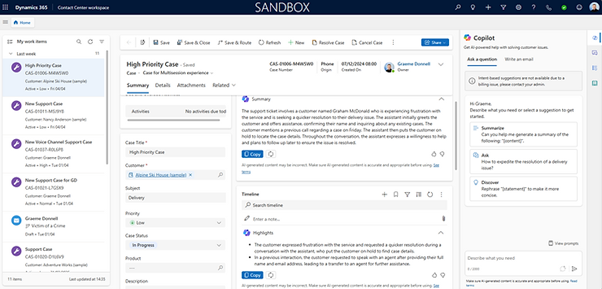
But importantly, this isn’t just another contact centre solution. Dynamics 365 Contact Center is a strategic toolkit for organisations looking to deliver intelligent, connected experiences across every customer touchpoint.
Omnichannel engagement made simple
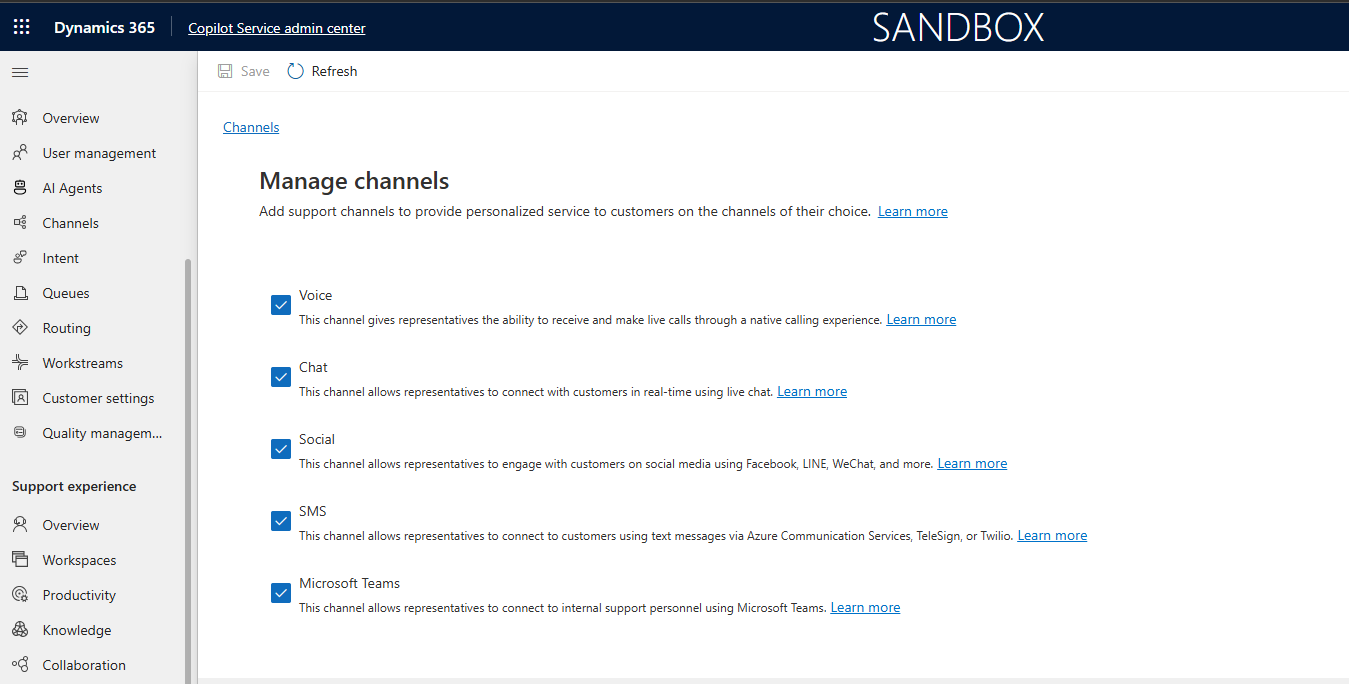
Dynamics 365 Contact Center brings together multiple communication channels into a single, intuitive workspace for your representatives to handle customer requests. Voice, chat, email, SMS, social media, and even AI-powered chatbots via Copilot Studio are all part of the platform.
In practice, this means that customers can start a conversation on one channel, such as chat, and switch to another, such as voice, without losing context. The seamless Dynamics 365 integration ensures a smooth, joined-up experience.
Key features of Dynamics 365 Contact Center
1) It wouldn’t be Microsoft without AI
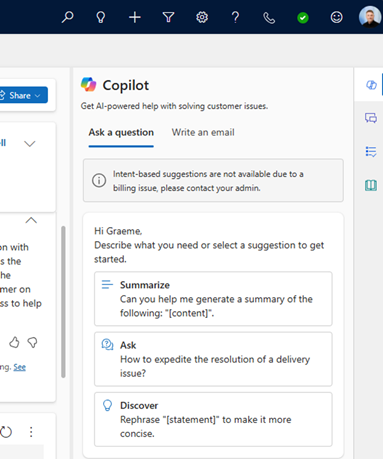
Of course, AI is at the heart of this solution. With Microsoft Copilot central to the design of customer service agents, the end-user benefits from real-time suggestions, summarised case histories, and intelligent routing that matches customers with the most suitable representative based on skills and availability. This means faster resolutions, improved first-contact success rates, and happier customers.
2) A unified customer service team experience
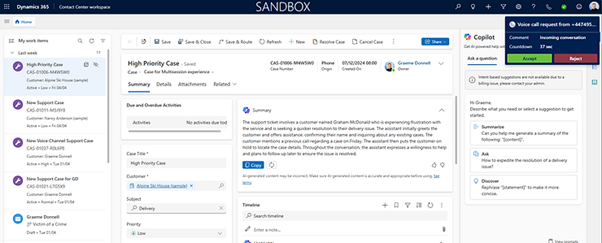
Dynamics 365 Contact Center simplifies the whole process of juggling multiple systems by providing a centralised user interface where reps can manage all interactions, such as voice calls, chats, and emails, alongside case histories and knowledge articles.
This reduces context switching, boosts productivity, and enables more informed service delivery.
3) Collaboration without barriers
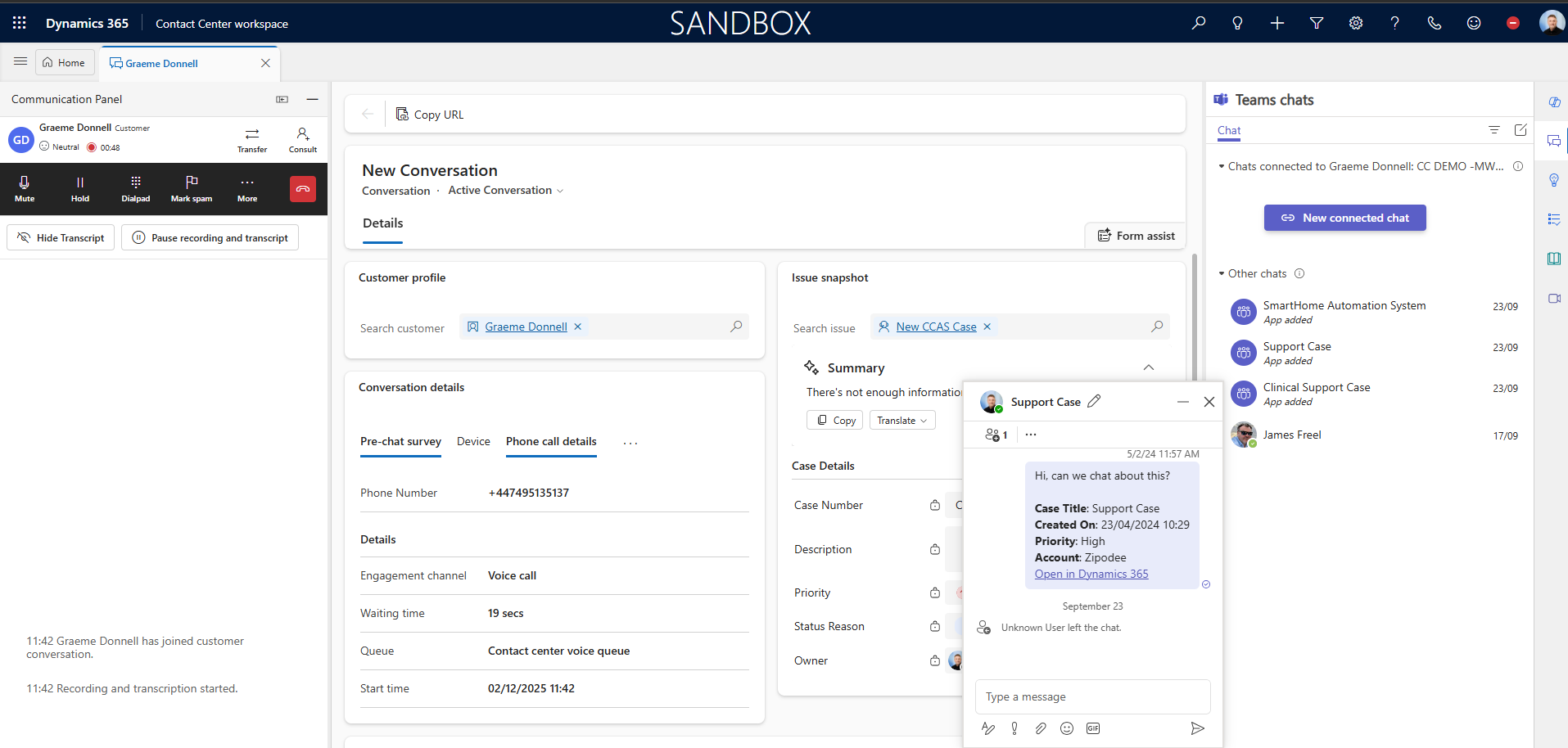
To provide a truly integrated platform, Dynamics 365 Contact Center integration with Microsoft Teams means reps can connect customers with subject matter experts instantly, even during live customer interactions.
Escalations, co-authoring responses, and internal collaboration become frictionless, driving faster resolutions and stronger teamwork.
4) Actionable insights for leaders
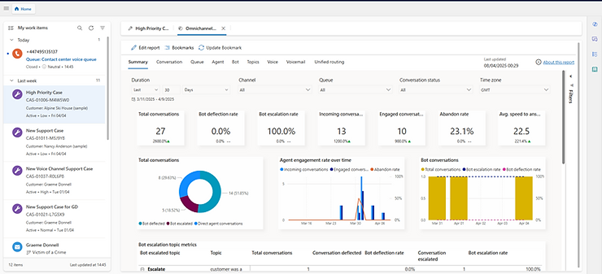
To enable supervisors and team leads to gain access to real-time dashboards and analytics that track KPIs like SLA compliance, team member performance, and customer sentiment. These insights enable proactive decision-making, workflow optimisation, and continuous improvement.
Use cases of Dynamics 365 Contact Center
Dynamics 365 Contact Center is transforming customer service across a range of sectors, from central and local government, to retailers, to banks.
For example, in a public sector setting, we’re seeing Dynamics 365 Contact Center being used to facilitate a scenario where a member of the public starts an engagement via live chat, then follows up by email, and later calls for more help or updates.
Traditionally, this could mean repeating the same issue and giving the same updates multiple times. With Dynamics 365 Contact Centre, all interactions are unified in one place so that representatives can see the full history of the customer’s journey, everything from chat messages to emails and call notes.
This means reps can respond quickly and accurately without asking the customer to repeat their issue or start over their engagement.
Why it matters: It saves time, reduces frustration, and creates a smooth, personalised experience for the customer.
In another example, financial institutions are using Dynamics 365 Contact Center to provide real-time insights. This means when a customer calls about a billing issue, the rep doesn’t have to dig through multiple systems.
Dynamics 365 Contact Center provides real-time access to account details, previous interactions, and even AI-driven suggestions for next steps. This means customer service teams can resolve issues faster and with confidence.
Why it matters: It improves first-call resolution rates and boosts customer satisfaction, while making the rep’s job easier.
Dynamics 365 Contact Center vs. Dynamics 365 Customer Service
Those familiar with Dynamics 365 Customer Service may be wondering: what does Contact Centre do differently?
Dynamics 365 Customer Service has designed to manage and resolve customer inquiries efficiently, offering case management, knowledge articles, and omnichannel engagement.
On the other hand, Contact Centre focuses on real-time interaction and advanced telephony capabilities, such as voice routing, call queues, and integrated analytics for live support environments.
The two solutions complement and integrate seamlessly with each other, meaning Contact Centre enhances Dynamics 365 Customer Service by adding enterprise-grade voice and routing features, while Dynamics 365 Customer Service provides the broader CRM style functionality for displaying customer history and case resolution.
Together, they create a seamless experience for your representatives and customers across all channels.
How to get started?
At Telefónica Tech, we help organisations unlock the full potential of Microsoft solutions as a business growth and transformation partner. Combined with Telefónica’s roots in telecommunications, we have a strong history of connecting people and businesses.
We see Dynamics 365 Contact Center as more than a technology upgrade. It’s a step towards customer-centric transformation. Our experts can guide you through planning, deployment, and optimisation, ensuring you leverage every capability to deliver exceptional service.
For those looking to migrate with confidence, our Contact Center Maturity Roadmap programme provides the perfect place to start with guided gap analysis, solution envisioning, and access to exclusive Microsoft funding* that maximises ROI.
See how Dynamics 365 Contact Center is enabling smarter, more connected customer experiences.