Key Data & AI Announcements from Microsoft Ignite


Key Data & AI Announcements: Microsoft Ignite 2025
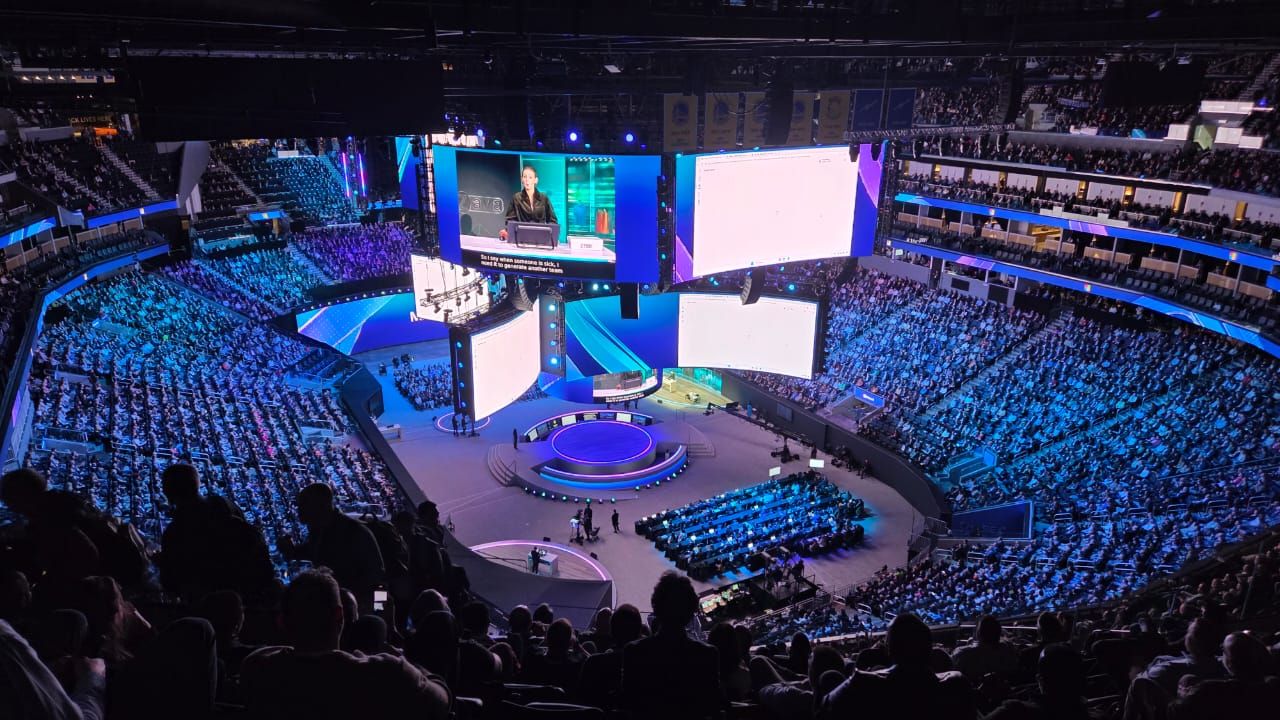
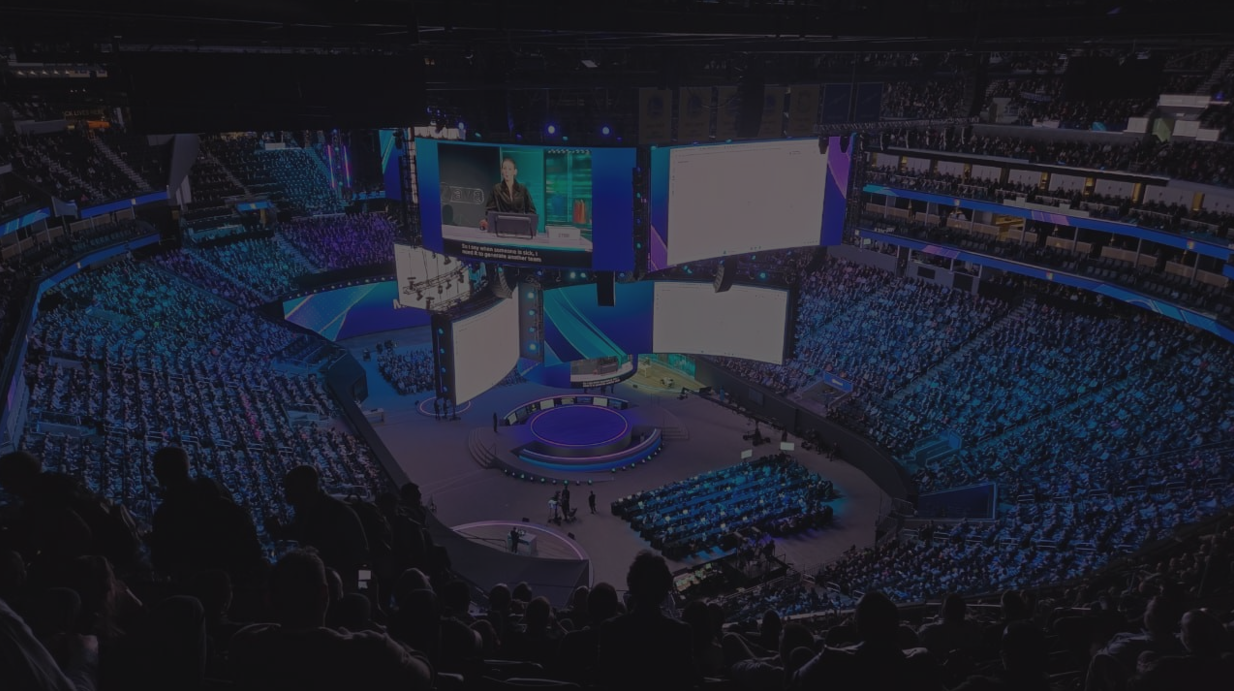
Microsoft Ignite 2025, held in San Francisco, confirmed we are now living in the era of Agentic AI, one that is powered by unified data, connected semantics, and the Model Context Protocol (MCP).
From quality of life and major enhancements across Microsoft Fabric, to deeper Databricks–Fabric interoperability and new ways of connecting SAP’s business data into AI workflows, Ignite showcased a future where intelligent agents will not only retrieve information, but reason, collaborate, act, and learn.
In this blog, I’ll be sharing my favourite themes from this year’s conference. For further details and announcements, read the book of news here.
Microsoft 365
Microsoft continues to expand Microsoft 365 Copilot capabilities to strengthen its position as a first-class agent ready for everyday work. With the introduction of dedicated agents for Word, Excel, and PowerPoint, Copilot is now capable of contextual reasoning, generating structured content, and coordinating multi-step tasks. These agents can ask clarifying questions, execute workflows, and ground their actions in enterprise data. Microsoft also announced a deeper integration with third-party ecosystems like Jira and ServiceNow through MCP Servers and new capabilities in Microsoft Teams, where agents can collaborate inside channels.
Microsoft Foundry
Foundry is a cornerstone to enable Microsoft’s AI-driven vision centred on agentic AI and autonomous powerful AI systems. Previously known as Azure AI Foundry, it took a major leap forward with the introduction of key functionalities, such as:
- Persistent agent memory, enabling agents to remember conversation history, preferences, and context. This reduces complexity (no need for external stores) and improves personalisation.
- Multi-agent workflows that let you orchestrate coordinated agents (e.g., for onboarding, approvals, supply chain) either via a visual design tool or code-first.
- A unified, secure MCP tool catalog
- A new Control plane for governance, observability, and lifecycle management.
- An open-source Microsoft Agent Framework, combining the best of Semantic Kernel and AutoGen, and durable execution (i.e., agents can recover from failures).
MCP
One of the standout themes at Ignite was the increasing focus on MCP tooling, especially as the unifying layer between AI agents and enterprise systems. This protocol is key to standardise how agents talk to data, APIs, workflows, and tools; and makes enterprise AI repeatable, governable, and interoperable. MCP is no longer a “nice to have” but instead is becoming the foundation for orchestrating agents that reason over data. Here are some of the new releases:
- New Dynamics 365 MCP servers (ERP logic + analytics)
- Power Apps MCP server (preview)
- Dataverse MCP server (now GA)
- First-party Foundry tools (transcription, translation, document intelligence) exposed as MCP tools
Microsoft Fabric
Fabric saw some of the largest announcements which strengthens the next step in the evolution from a unified data platform to a unified intelligent platform. Here are the top 3 innovations:
- Fabric IQ (Preview)
- Deeper Fabric and Databricks Integration
- SAP Business Data Cloud (BDC) Connect for Microsoft Fabric
Fabric IQ
Fabric IQ represents one of the most exciting shifts announced at the conference. Fabric IQ introduces a semantic intelligence layer powered by ontologies, enabling organisations to model their core business concepts, such as customers, orders, assets, events, in a way that aligns with how the business operates. By binding these entities to real data in OneLake, Fabric IQ creates a navigable graph of relationships that both analytics and AI agents can reason over. This allows Fabric Data Agents and Operations Agents to deliver context-aware insights, automate decisions, and understand business questions in natural language using a shared, governed language. The result is a consistent semantic foundation that bridges BI, data engineering and AI, accelerating how teams build trustworthy, enterprise-ready intelligence solutions.
Fabric and Databricks Integration
Databricks and Microsoft are deepening their integration via Unity Catalog (UC) and OneLake. Soon you will be able to add a Databricks UC catalog, schema or individual tables into Fabric, and use that data seamlessly in Fabric workloads. On the other hand, Fabric lakehouses can be federated back into Databricks, meaning you can register Fabric’s semantic SQL endpoint in Databricks UC and use Databricks compute to query Fabric data with full governance. These integrations mean that organisations no longer have to choose which platform “owns” their data. Instead, Fabric and Databricks become complementary engines over a shared data foundation. This interoperability also unlocks exciting scenarios for agentic AI. For example, by leveraging Fabric IQ and Foundry’s MCP ecosystem, Fabric Agents will have the ability to query and reason over Databricks data with UC preserving end-to-end governance.
SAP BDC Connect for Microsoft Fabric
SAP BDC Connect for Microsoft Fabric enables bi-directional, zero-copy sharing of SAP BDC data into Microsoft Fabric. With this new feature, businesses can build semantic models in Fabric that include SAP’s richly governed business data, and then surface that into agents, analytics, or AI apps. Additionally, MCP agents can reason over enterprise-critical SAP data in real time, combining it with other sources and taking actions or providing insights grounded in business context.
Final Thoughts
This year’s announcements highlight a clear industry shift where data and AI are converging into unified, intelligent ecosystems that can understand context, adapt in real time and drive meaningful business outcomes. As platforms become more interconnected and intelligence becomes embedded across workflows, organisations have a unique opportunity to rethink how they operate and how to transition from reactive reporting to proactive, insight-driven decision-making.