
Introducing Databricks Lakewatch


What is Databricks Lakewatch and Why It Matters for Security Teams
Security teams are under increasing pressure.
Data volumes continue to grow, threats are more complex, and traditional SIEM platforms are becoming harder to manage cost-effectively. In many environments, costs are rising while less data is retained and visibility is reduced.
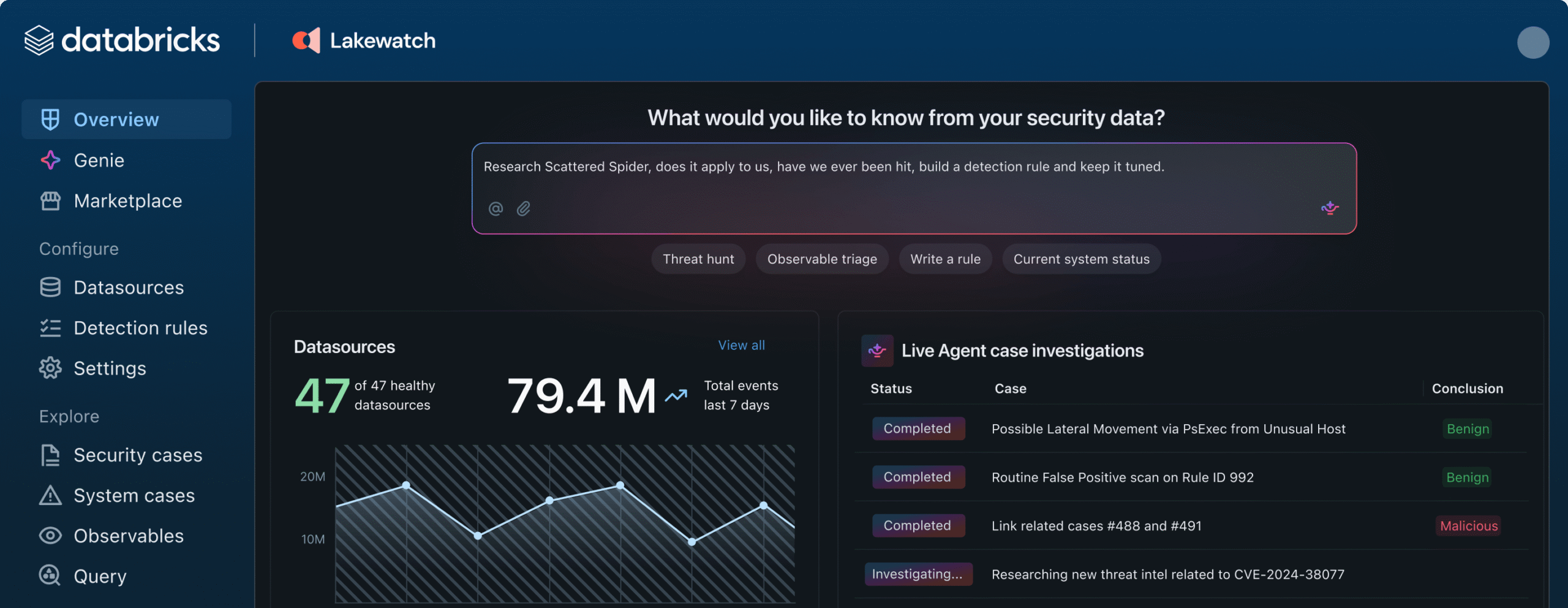
On 24 March, Databricks announced Lakewatch, a new open, agentic SIEM designed for AI-driven security operations. This announcement reflects a broader shift in how security platforms are evolving. As a result, a new approach is emerging: Databricks SIEM.
This blog explains what Databricks Lakewatch is, how it works, and why it will become an important part of modern security architecture.
What is Databricks Lakewatch?
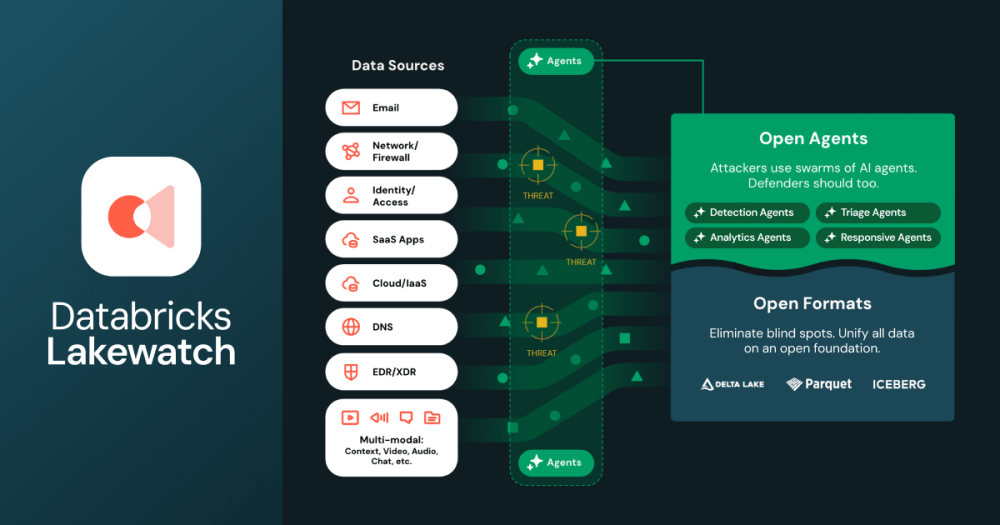
Databricks Lakewatch is an approach to security analytics that combines traditional SIEM platforms with the Databricks Lakehouse.
This moves away from traditional, legacy SIEM systems that struggle to scale to large data volumes, into a lakehouse based architecture that is based on open file formats, incorporates governance at the core and is infinitely scalable to handle large data volumes.
This creates a security data platform that enables teams to:
• Retain larger volumes of security data
• Analyse data across multiple systems
• Apply machine learning to detection and investigation
• Investigate incidents over longer timeframes
How Databricks Lakewatch Works
Databricks Lakewatch uses a lakehouse architecture designed for scale and flexibility.
Security data is ingested from telemetry sources into Databricks, where it is stored and analysed.
Key elements include:
• Data ingestion from applications, identity systems, endpoints, and networks
• Delta Lake storage for structured, cost-efficient retention
• Normalisation using open schemas such as OCSF and ECS
• Intelligent analytics and machine learning for detection and investigation
By separating storage from compute, this model allows large volumes of data to be retained without increasing costs in line with ingestion.
Why Databricks Lakewatch Matters
The Lakewatch announcement highlights several changes in security operations that make this approach increasingly important.
1. Data Volumes Continue to Increase
Security data is growing across cloud platforms, endpoints, applications, and identity systems. Traditional SIEM platforms often require trade-offs between cost and retention. Data may be filtered, sampled, or deleted to manage licensing and storage.
Databricks Lakewatch removes this constraint by enabling long-term storage of full-fidelity data.
2. Threats Are Becoming More Automated
Attackers are increasingly using automation and AI to identify vulnerabilities and execute attacks at scale.
This reduces the time available to detect and respond. Databricks Lakewatch supports faster analysis by enabling:
• Large-scale data processing
• Cross-platform correlation
• More advanced detection techniques
3. Traditional SIEM Architectures Are Cost-Constrained
Most SIEM platforms couple storage and compute, creating a cost impact for every byte of data ingested. This leads to:
• Reduced data retention
• Limited historical analysis
• Gaps in visibility
Databricks Lakewatch separates storage from compute, allowing data to be stored cost-effectively and analysed when required.
4. Security Requires Broader Context
Security investigations increasingly depend on data beyond traditional logs. Relevant signals may include:
• Identity and access activity
• Business applications
• Collaboration platforms
• Operational data
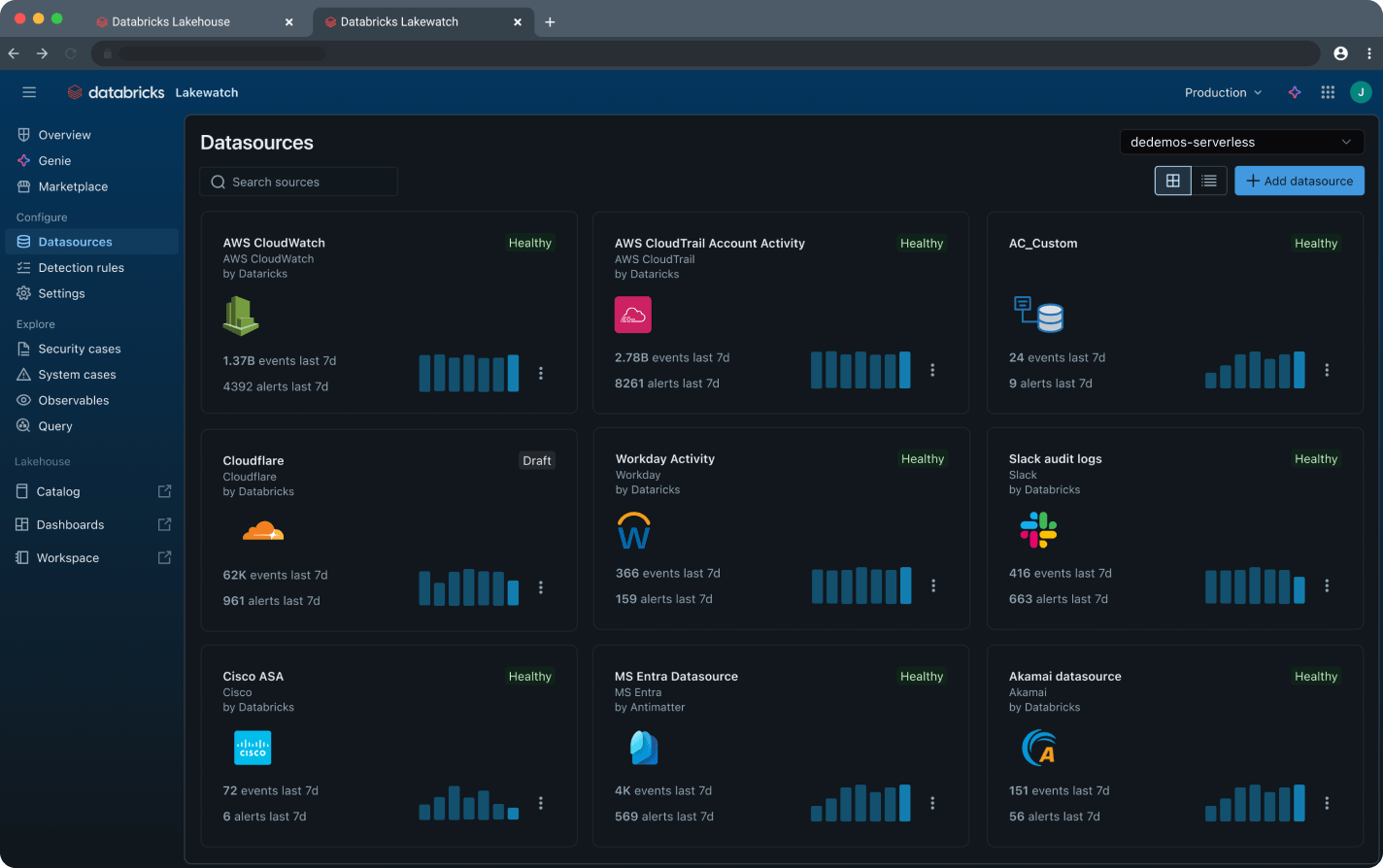
Databricks Lakewatch enables analysis across these sources in one platform, improving context and decision-making.
From SIEM to Security Data Platforms
The introduction of Lakewatch reflects a shift towards security data platforms.
In this model:
• Data is stored in open formats
• Analytics runs directly on the data platform
• Machine learning is integrated into detection and investigation
• Security teams can query data across systems
Databricks Lakewatch aligns with this approach by extending traditional SIEM systems with a scalable data foundation.
Databricks Lakewatch Use Cases by Industry
The ability to retain and analyse large volumes of data over time creates new opportunities across industries.
- Healthcare: Monitor access to sensitive patient records across identity, application, and endpoint data, supporting GDPR and NHS compliance through extended data retention.
- Public Sector: Enable long‑term audit and investigation across multiple systems, helping organisations meet national security frameworks and regulatory requirements.
- Retail and E-commerce: Detect account takeover attempts by correlating web, device, and authentication data, and analyse fraud patterns during high‑volume trading periods.
- Financial Services: Correlate transaction data with identity and authentication events to identify fraud patterns, while supporting regulatory reporting through long‑term, queryable security data.
- Manufacturing and Supply Chain: Correlate operational technology (OT) and IT security data to detect anomalies, while monitoring supplier and third‑party risk over longer timeframes.
What This Means for Security Teams
Adopting Databricks Lakewatch changes how security operations are delivered.
Teams can:
• Reduce reliance on high-cost SIEM storage
• Retain and analyse more historical data
• Improve investigation speed and effectiveness
• Apply machine learning to detection and analysis
• Gain visibility across multiple systems
This supports a more scalable and flexible approach to security analytics.
How Telefónica Tech Supports Databricks Lakewatch
Telefónica Tech works with Databricks to help organisations adopt this model.
This includes:
• Assessing SIEM costs and data architecture
• Designing Databricks Lakewatch solutions
• Integrating with existing security platforms
• Building analytics and detection use cases
Learn more about Databricks Lakewatch with Teleónica Tech here.
Start Your SIEM Modernisation Journey
The Lakewatch announcement signals a clear direction for security platforms.
Traditional SIEM tools remain important, but they are no longer sufficient on their own.
Databricks Lakewatch provides a way to extend SIEM with scalable data storage and advanced analytics, helping security teams improve visibility, manage costs, and strengthen operations.
Speak to our team to assess how this approach can support your security strategy.